







How Artificial Intelligence Is Changing Businesses
Discover how Artificial Intelligence is transforming business operations, customer service, marketing, decision-making and software systems—and how organizations can adopt it responsibly.
From small shops and professional service providers to schools, hospitals, churches and large organizations, AI is creating new ways to handle information, communicate with customers, automate repetitive activities and support decisions.
Businesses do not necessarily need to build complex AI systems to benefit. Many can begin with practical tools that help staff write, research, organize information, analyze data or complete routine tasks more efficiently.
The real opportunity is not simply to use AI because it is popular. It is to identify business problems that AI can help solve while protecting customers, employees and organizational information.
1. What Is Artificial Intelligence?
Artificial Intelligence (AI) refers to computer systems designed to perform tasks that normally require human-like capabilities, such as recognizing patterns, understanding language, generating content, making predictions and supporting decisions.
Different AI technologies serve different purposes. Some analyze large amounts of information, while others generate text, images or code. Some are built into existing applications, and others operate as separate tools or specialized systems.
🧠 Machine Learning
Uses data to identify patterns, make predictions and support tasks such as demand forecasting, classification and fraud detection.
✍️ Generative AI
Creates or transforms content such as text, summaries, images, presentations and computer code in response to instructions.
💬 Conversational AI
Allows people to interact with computer systems through natural language, such as asking questions or requesting information.
⚙️ AI-Assisted Automation
Combines AI with software workflows to help classify requests, process information, prepare responses or support repetitive activities.
2. How AI Is Changing Business Operations
AI can influence many business functions. Its usefulness depends on the quality of the tools, the information available, the task being performed and the way the organization implements it.
📊 Data Analysis
AI tools can help summarize datasets, identify patterns, compare figures and prepare preliminary insights for business owners and managers.
📧 Communication
Businesses can use AI to draft emails, prepare reports, summarize meetings and improve written communication before a person reviews the final version.
📣 Marketing and Branding
AI can assist with brainstorming campaigns, preparing social media content, drafting product descriptions and adapting messages for different audiences.
🤝 Customer Service
Conversational tools can answer selected routine questions, guide customers to information and help support teams organize incoming requests.
📦 Inventory and Sales Planning
Where suitable historical data is available, AI-assisted analysis can help identify sales patterns and support stock-planning decisions.
💻 Software Development
Developers can use AI to assist with writing code, explaining unfamiliar code, preparing documentation, identifying possible errors and generating test ideas.
3. Practical AI Applications for Small Businesses
AI is not reserved for large corporations. Small businesses can explore relatively simple applications that fit their existing operations and budgets.
Example 1: A Retail Shop or Supermarket
A business may use AI tools to analyze sales records, prepare product descriptions, draft promotional messages and identify possible trends in product demand.
Potential benefit: Better-informed planning and reduced time spent preparing routine business materials.
Important consideration: Recommendations about stock purchases should be checked against actual stock levels, supplier lead times and available cash.
Example 2: A Professional Service Business
A web development or IT services company may use AI to brainstorm content, prepare draft proposals, summarize client requirements and assist with technical research.
Potential benefit: Faster preparation of routine documents and more time for technical work and client communication.
Important consideration: Project costs, technical specifications, contractual terms and final recommendations still require professional review.
Example 3: A School or Training Institution
Teachers and administrators may use AI to develop draft lesson materials, generate practice questions, organize training content and summarize non-sensitive administrative information.
Potential benefit: Assistance with preparation and administrative workloads.
Important consideration: Teachers should verify the accuracy, suitability and curriculum alignment of educational content. Student information must be handled carefully.
Example 4: An NGO or Nonprofit Organization
An NGO may use AI to outline project proposals, draft reports, organize non-sensitive information, prepare communication materials and assist with project planning.
Potential benefit: Support for documentation and communication, particularly when staff members have several responsibilities.
Important consideration: Donor information, beneficiary records, safeguarding details and confidential organizational documents should not be entered into unapproved AI services.
Example 5: A Clinic or Healthcare Facility
Depending on the tool and applicable requirements, healthcare organizations may explore AI-assisted administrative workflows, appointment communication, document preparation or analysis of suitable data.
Potential benefit: Support for selected administrative processes and information management.
Important consideration: Medical decisions, diagnostic conclusions and patient-care recommendations require appropriate qualified professional oversight. Patient data must be protected.
4. How AI Is Changing Customer Experience
Customers increasingly interact with businesses through websites, messaging platforms, email and digital applications. AI can help organizations manage these interactions, provided the systems are designed and monitored properly.
- Faster responses: AI assistants can help answer common questions when they have reliable information and appropriate access.
- Personalized communication: AI can help adapt messages to customer needs, subject to privacy and consent requirements.
- Information discovery: AI-powered search can help users find relevant information more naturally.
- Support request classification: AI can help group enquiries by topic or urgency for review by staff.
- Communication assistance: AI can draft replies that staff review before sending.
5. AI and Business Management Systems
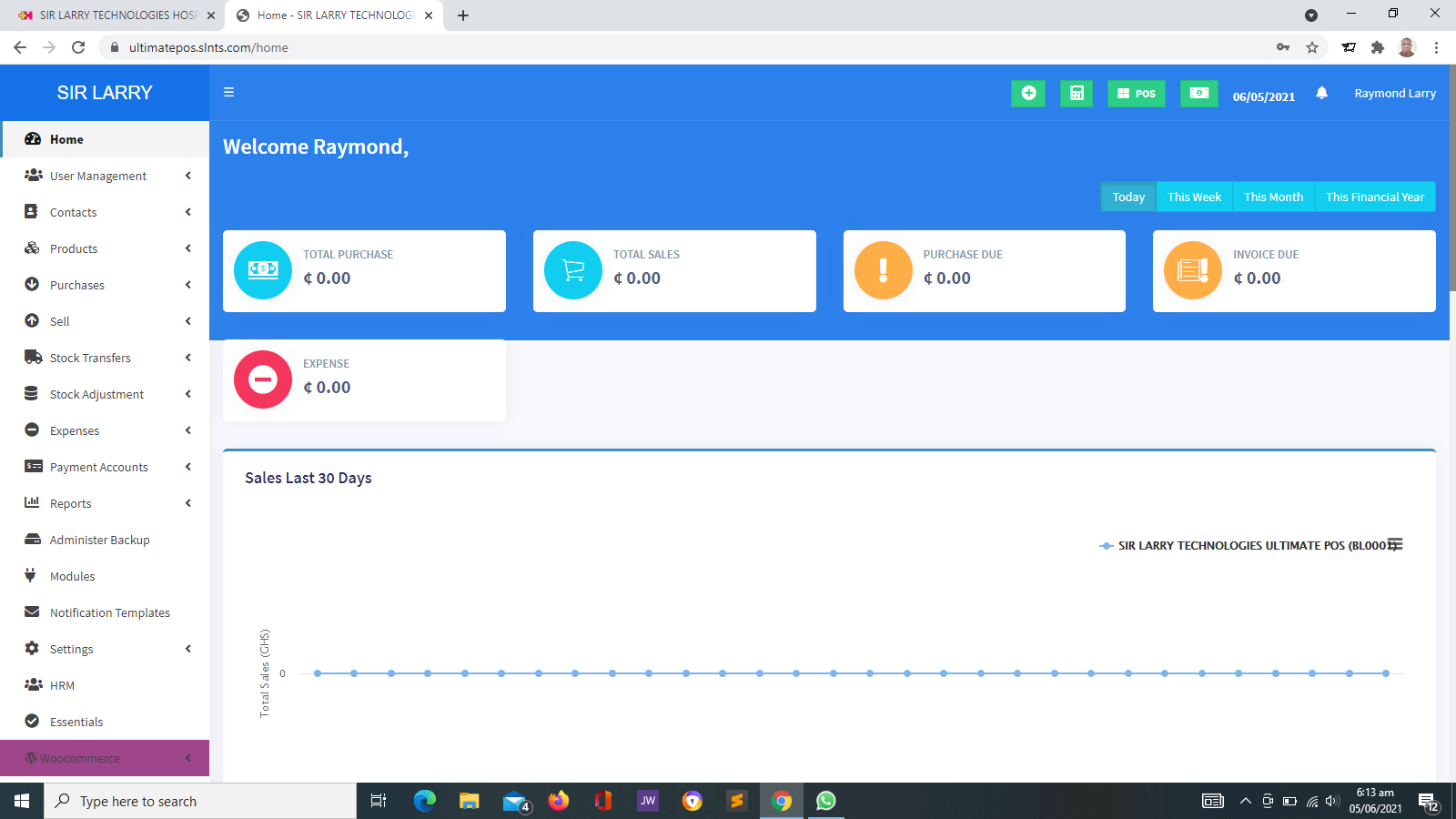
Business management systems help organizations maintain records and manage day-to-day activities. AI may extend these systems by helping users search information, summarize records, identify patterns or automate selected workflows.
🛒 POS and Inventory
AI-assisted features could help interpret sales patterns, identify unusual movements or support demand forecasting when accurate historical data is available.
🏫 School Management
AI could help summarize administrative information, prepare draft communications and assist staff with locating information they are authorized to access.
⛪ Church Management
Potential applications include drafting announcements, organizing non-sensitive information and assisting with routine administrative communication.
🏢 NGO Management
AI could assist with project report drafting, activity summaries, document classification and analysis of appropriate organizational data.
👥 Human Resource Management
AI can help draft job descriptions, prepare training materials and summarize administrative documents. Employment decisions require appropriate human oversight.
📈 Accounts and Reporting
AI may assist with explaining financial summaries, categorizing preliminary information or identifying figures that need further review. Financial records must be verified.
These are examples of possible applications, not a claim that every management system already includes AI. Each feature must be assessed, developed or enabled according to the system's capabilities and the client's requirements.
6. The Benefits of AI for Businesses
⏱️ Time Savings
AI can accelerate selected tasks such as drafting, summarizing, classifying information and preparing first versions of documents.
💡 More Ideas
Businesses can use AI to explore alternative approaches, brainstorm product ideas and develop preliminary plans.
📚 Easier Access to Information
Suitable AI tools can help users understand complex material, explain technical concepts and locate relevant information.
📊 Better-Informed Decisions
AI-assisted analysis can reveal patterns that support decisions when the underlying information is reliable and the results are reviewed.
🚀 New Opportunities
Businesses may identify new services, improve existing workflows or develop new ways to serve their customers.
👨💻 Staff Productivity
By assisting with repetitive tasks, AI can help staff devote more time to judgment, problem-solving, relationships and other work requiring human involvement.
7. The Risks and Limitations of AI
Although AI offers useful opportunities, adopting it without proper controls can create technical, financial, operational and ethical problems.
⚠️ Incorrect Information
AI can produce convincing but false answers, inaccurate calculations or invented details. Important outputs must be checked against reliable sources.
🔐 Privacy and Confidentiality
Submitting sensitive business or personal information to an unsuitable tool can expose confidential data. Review privacy and data-handling arrangements before use.
💰 Costs and Dependencies
Subscriptions, usage charges, integration work, training and maintenance may increase the overall cost of an AI solution.
⚖️ Bias and Unfair Outcomes
AI outputs may reflect biases in training data or system design. Extra care is necessary when decisions affect people, opportunities or access to services.
🛡️ Security Risks
Poorly configured integrations or excessive permissions may expose systems and data to unauthorized access.
🧑⚖️ Overdependence on Automation
Relying entirely on AI can weaken oversight and lead to errors going unnoticed. People must remain responsible for important decisions.
8. How Businesses Can Start Using AI
Organizations do not need to transform every operation at once. A practical approach is to start with a specific problem, evaluate the results and expand only when there is a clear benefit.
Identify a Real Business Problem
Look for a repetitive or time-consuming task, such as preparing routine emails, drafting product descriptions or summarizing non-sensitive reports.
Choose an Appropriate Tool
Compare the available tools based on functionality, cost, usability, privacy, security, integration requirements and support.
Start with a Small Trial
Test the tool on a limited task using non-sensitive information or approved sample data before introducing it into important business workflows.
Verify the Results
Check whether the output is accurate, useful, consistent and suitable for the intended audience. Compare the results with the existing process.
Establish Clear Rules
Define which tools employees may use, what information they may submit, which tasks require human approval and how errors should be reported.
Measure the Business Impact
Track relevant measures such as time saved, error rates, customer response times, cost per task or staff satisfaction.
Expand Carefully
If the trial demonstrates a meaningful benefit, consider extending the solution to other suitable tasks while maintaining appropriate security and oversight.
9. AI, Employees and the Future of Work
AI is changing how some tasks are performed and what skills businesses need. Its effects vary by industry, job role, tool and level of adoption.
Some tasks may become faster or more automated, while other responsibilities may grow in importance. These include reviewing AI-generated work, managing relationships, solving complex problems, exercising professional judgment and ensuring responsible technology use.
Skills Businesses Should Encourage
- Digital literacy: Understanding how digital tools work and when they are appropriate.
- AI literacy: Knowing the capabilities and limitations of AI systems.
- Critical thinking: Checking information rather than accepting every AI response as correct.
- Data protection: Handling personal, customer and organizational information responsibly.
- Communication: Giving clear instructions and explaining results to colleagues and customers.
- Adaptability: Learning new tools and adjusting workflows as business needs change.
Businesses should evaluate how AI affects their employees and provide suitable guidance and training. AI should be introduced with a clear understanding of the problem being addressed and the people affected by the change.
10. AI Adoption in Ghana and Other African Markets
Businesses in Ghana and across Africa can explore AI applications in areas such as retail, agriculture, education, professional services, healthcare administration and customer communication.
However, successful adoption depends on local circumstances. Organizations should consider internet access, electricity reliability, device availability, digital skills, data quality, service costs and the suitability of tools for local languages and business practices.
Practical Considerations for Ghanaian Businesses
- Start with affordable use cases: Choose a task where a small trial can demonstrate value before making a large investment.
- Consider connectivity: Determine whether the tool requires continuous internet access or supports the intended working environment.
- Check local relevance: Review whether the outputs are suitable for Ghanaian customers, terminology, currency and business practices.
- Protect personal information: Follow applicable data protection obligations and use appropriate safeguards.
- Train users: Make sure staff understand how to use the tool and verify its outputs.
- Evaluate the full cost: Include subscriptions, data usage, integration, training and ongoing support where applicable.
11. AI and the Role of Technology Service Providers
Technology service providers can help businesses determine whether AI is suitable for a particular problem and how it might fit into their existing digital operations.
Depending on the project, the work may involve reviewing business requirements, identifying suitable tools, planning integrations, improving data workflows, developing software or training users.
🔍 Technology Assessment
Understand the client's objectives, existing systems, data needs, budget and expected outcomes before recommending an approach.
🔗 System Integration
Assess whether an AI service can be connected safely and reliably to an existing website or business application.
🧩 Workflow Improvement
Identify repetitive processes that may benefit from automation while preserving necessary human approval and accountability.
🎓 Training and Support
Help users understand the tools, follow suitable procedures and recognize the limitations of AI-generated outputs.
Not every business needs a custom AI solution. In some cases, an existing tool may be sufficient. In others, a deeper assessment or integration project may be necessary. The appropriate option depends on the business problem, available resources and expected benefits.
12. Frequently Asked Questions About AI in Business
Q1. Does every business need Artificial Intelligence?
No. AI is a tool, not a requirement for every organization. Businesses should evaluate whether it solves a genuine problem, improves an existing process or creates a worthwhile opportunity.
Q2. Can small businesses use AI without hiring an AI developer?
Yes. Many existing AI tools can be used through ordinary web or mobile interfaces. Custom development may be necessary when a business needs specialized functionality or integration with its own systems.
Q3. Can AI reduce business operating costs?
It can reduce the time or effort required for some tasks, but savings are not guaranteed. Subscription fees, implementation costs, staff training and quality checks must be considered when evaluating the overall financial impact.
Q4. Is AI always accurate?
No. AI can produce incorrect, incomplete or misleading information. Verify important outputs, particularly those involving financial, medical, legal, technical or personal decisions.
Q5. Can AI replace an entire business management system?
Usually, AI and business management systems serve different purposes. A management system stores records and supports defined workflows, while AI may assist with analysis, content generation or selected automated tasks. AI may complement a system rather than replace it.
Q6. Can AI be integrated into an existing website or application?
Potentially, yes. Integration depends on the application's architecture, available interfaces, the selected AI service, security requirements, cost and the functionality required. A technical assessment should be completed before implementation.
Q7. Is it safe to enter company information into AI tools?
It depends on the tool, its data-handling practices, the type of information and your organization's policies. Do not submit confidential or personal information to an unapproved service. Review the provider's privacy and security arrangements first.
Q8. How can a business measure the value of AI?
Define a measurable objective before implementation. Depending on the task, this could include reduced processing time, fewer errors, improved response times, lower costs or better user satisfaction.
Q9. Will AI eliminate all jobs?
No such outcome can be assumed. AI may automate some tasks, change others and create new responsibilities. Its impact varies by occupation, industry and how organizations choose to implement the technology.
Q10. What is the best first step for a business interested in AI?
Identify one clear business problem, assess a suitable tool, test it on a limited task and measure the results. Expand only when the benefits, costs and risks are reasonably understood.
13. The Future: Businesses That Combine Technology with Human Judgment
AI capabilities will continue to evolve, creating new possibilities for communication, analysis, automation and software development. However, access to AI alone does not guarantee business success.
Organizations still need sound processes, reliable information, appropriate technology, trained people and clear accountability. AI is most useful when it supports well-defined business objectives rather than being introduced simply because it is new.
The Key Takeaway
Businesses that approach AI thoughtfully can explore new ways to work, improve selected processes and make better use of information. The goal should be to combine the strengths of technology with human experience, responsibility, creativity and judgment.
Exploring Technology Solutions for Your Business?
Sir Larry Technologies provides website development, business management systems and IT services. If your organization is exploring digital transformation, software integration or ways to improve its business processes, visit our website to learn more about our services and discuss your requirements.
Visit Sir Larry Technologies